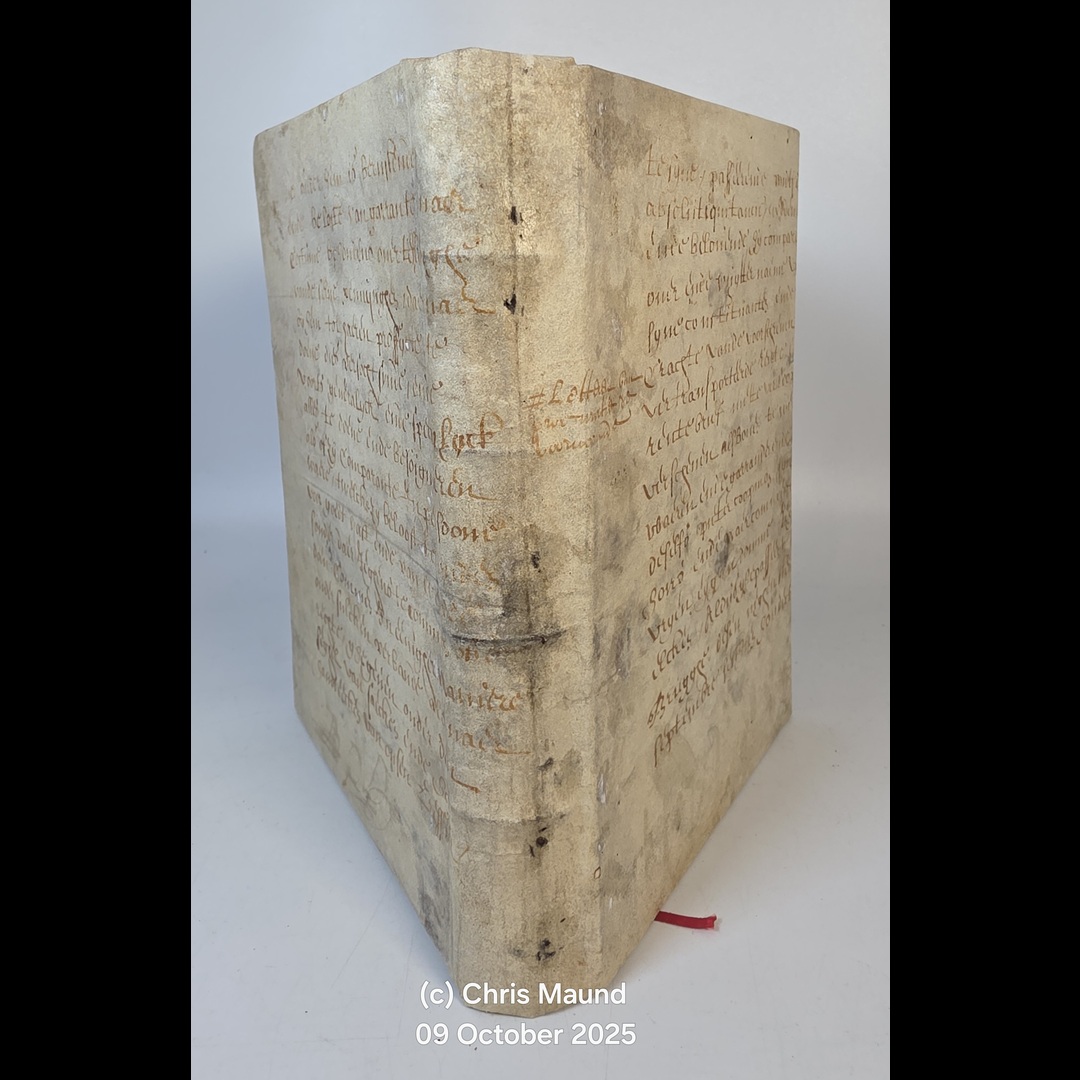
1527 1st Edtn (Thus)/1st Prnt P. OVIDII NASONIS FASTORUM LIBRI By Ovidio (Ovidius Naso Publius)/Antonio Constantio Fanensi/Paulus Marsus Piscinate Illus. Anon Very Good Poetry Ovidio (Ovidius Naso Publius)/Antonio Constantio Fanensi/Paulus Marsus Piscinate Non-Fiction
$4,268.37
In Stock
AbeBooks
View Deal at AbeBooks
You'll be taken to the retailer's site to complete your purchase.
Please email for Photographs or further information. Very Good - First Toscolano edition; first Paganino printing. 4to (c. 210 × 150 mm). Text in two columns, Roman type with commentary in smaller type. Woodcut title-page border of interlaced strapwork; woodcut vignettes illustrating the openings of individual books of the Fasti. Printed shoulder notes and commentary surrounding the text of Ovid. Final leaf with colophon and register. Head- and tail-pieces; initial letters woodcut and ornamented.Handsome woodcut border title, small woodcut vignettes at the openings of Books. The binding is reused 16th Centuary financial or notaria intrument from Bruges vellum (manuscript waste) written in a Netherlandish hand (Middle Dutch / Flemish, early-modern cursive), a recycled legal document. Please see photos as part of condition report 1527 1st Edition (Thus) 1st Printing, P. OVIDII NASONIS FASTORUM LIBRI diligenti emendatione. Typis impressi aptissimisque figuris ornati, commentatoriis Antonii Constanti Fanensis et Pauli Marsi Piscinatis virorum clarissimorum, cum additis quibusdam versibus qui deerant in aliis codicibus By Ovidio (Ovidius Naso Publius)/Antonio Constantio Fanensi/Paulus Marsus Piscinate Publius Ovidius Naso (Ovid) (43 BCE - c. 17/18 CE) Ovid was one of the three great poets of Augustan Rome, alongside Virgil and Horace. Antonio Constantio Fanensi (Antonius Constantius Fanensis) (fl. late 15th-early 16th century) An Italian humanist and commentator, probably from Fano in the Marche region (hence Fanensis), Antonio Constantius was active in the late 15th century as a teacher of rhetoric and classical literature. He is best known for his commentaries on Ovid's Fasti and on other Latin poets, which circulated in print through the early 1500s. His work reflects the Renaissance humanist approach to classical mythology, emphasizing philology, moral interpretation, and the recovery of ancient religious practices. Paulus Marsus Piscinate (Paolo Marsi da Pescina) (1440-1484) Paolo Marsi, Latinized as Paulus Marsus, was an Italian poet, scholar, and commentator born in Pescina in the Abruzzi. A member of the Roman Academy founded by Pomponio Leto, he was deeply involved in the revival of Roman antiquity and pagan literature during the early Italian Renaissance. Marsus produced commentaries on Ovid (Fasti, Metamorphoses), Cicero, and other classical authors, combining humanist erudition with an antiquarian interest in ancient religion and custom. He was admired for his elegant Latin and insight into mythological symbolism. His untimely death in 1484 curtailed a promising career, but his Ovidian commentaries continued to be printed and used well into the 16th century, often alongside those of Antonio Constantius. Illustrated By: Anon A fine woodcut title border and small illustrative vignettes of mythological subjects at the openings of the books, after Venetian designs attributed to the circle of Benedetto Bordon. Woodcuts printed from blocks previously used or copied for Venetian Ovid editions; typical of the Paganino press. Format: Vellum, quarto (4to 9+1?2 × 12 241 × 305),Pages 136 Language: latin Dust Jacket: No Jacket, Dust Jacket Condition: No Jacket Published By: Alexander (Alessandro) Paganinus, Toscolano, Italy Synopsis: P. Ovidii Nasonis Fastorum libri (Ovid's Fasti). With commentaries by: Antonio Constantio Fanensi and Paulus Marsus Piscinate (noted humanists whose notes commonly accompany 16th-c. school/reader's editions). Ovid's unfinished elegiac poem in six books that follows the Roman religious calendar (Jan-Jun), explaining festivals, rites, and myths behind each date. A rare blend of myth, antiquarian lore, and civic religion; a key source on Roman cult practice. Written near the time of Ovid's exile, it carries an undertone of nostalgia for Rome's rituals. Humanist school edition with the influential commentaries of Antonio Constantius Fanensis and Paolo Marsus (Paulus Marsus) da Pesc
| Store | AbeBooks |