Samuel Cavalcanti Costa
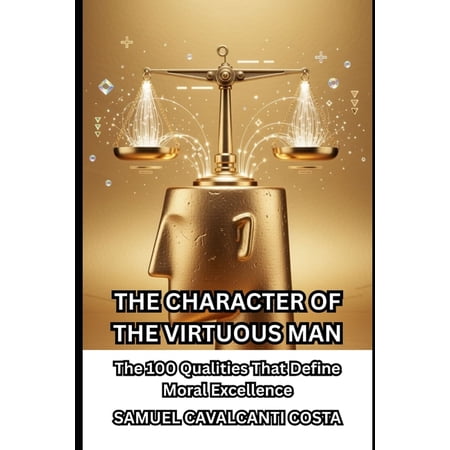
The Character of the Virtuous Man The Character of the Virtuous Man: The 100 Qualities That Define Moral Excellence Book 1 (Paperback)
$250.00
In Stock
Walmart
View Deal at Walmart
You'll be taken to the retailer's site to complete your purchase.
BrandSamuel Cavalcanti Costa
Size[]
ConditionNew
Before we delve into the 100 qualities it s necessary to establish a foundation. What do we understand by virtue? What does it mean after all to be virtuous? The word virtue has its root in the Latin * virtus* which originally designated the strength power and excellence proper to a man ( *vir *). The Greeks before us used the term *areté* which can be translated as excellence or fulfillment of purpose. For an ancient Greek virtue was not something separate from concrete life: the *areté * of a horse was to run well; the *areté* of an eye was to see well; the *areté* of a human being was to live well to fully realize their nature. This initial understanding already gives us an important clue: being virtuous is not about following an arbitrary set of rules imposed by an external authority. Rather it is about fulfilling one s own nature in the best possible way. It is about flourishing as a human being. Aristotle the great Greek philosopher dedicated one of his most important works- Nicomachean Ethics -to investigating what makes human life excellent. His fundamental conclusion is that virtue is an acquired disposition to act according to right reason. In other words to be virtuous is to have a character such that naturally almost spontaneously we tend to do good. For Aristotle virtue is not innate. We are born with the capacity to become virtuous but this capacity is only actualized through practice. Just as we learn to play an instrument by playing we learn to be just by acting justly to be courageous by acting courageously to be temperate by exercising self-control. Virtue therefore is a habit but not in the mechanical sense of the word. It is an intelligent habit a second nature that we acquire through repeated choices. The virtuous man does not act correctly by chance or by coercion but because he has become that kind of person. Another fundamental aspect of the Aristotelian view is the idea of the middle ground. Each virtue represents the balance between two vicious extremes: one of excess the other of deficiency. Courage for example is the middle ground between cowardice (deficiency) and recklessness (excess). Generosity lies between avarice (deficiency) and prodigality (excess). Patience lies between anger (excess) and passivity (deficiency). Being virtuous therefore requires discernment-the ability to find in each concrete situation the exact point of balance. Aristotle called this phronesis -practical wisdom prudence. It is intelligence applied to moral life. Without it virtues can become blind; with it they become precise and appropriate to each circumstance. The Stoic tradition in turn added an important emphasis: virtue is the only true good and vice the only evil. External circumstances-wealth poverty health illness fame anonymity-are indifferent. We do not become better or worse by having them or not. What matters is how we deal with them how we respond to the events that life presents us. For the Stoics a virtuous life is one lived in accordance with nature-the nature of the cosmos and the rational nature of humankind. It means serenely accepting what we cannot control a
| Brand | Samuel Cavalcanti Costa |
| Size | [] |
| Condition | New |
| Barcode / EAN | 9798250874298 |
| Store | Walmart |