-47%
Rodger M Payne
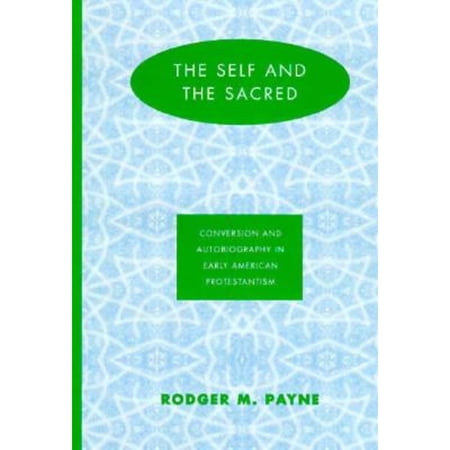
Pre-Owned The Self and the Sacred : Conversion and Autobiography in Early American Protestantism (Hardcover) 9781572330153
$14.34
$26.96
In Stock
Walmart
View Deal at Walmart
You'll be taken to the retailer's site to complete your purchase.
BrandRodger M Payne
Size[]
9781572330153. Pre-Owned: Good condition. Hard cover. Language: English. Pages: 136. Sewn binding. Cloth over boards. 136 p. From about 1740 to 1850 evangelical Protestantism became a major cultural force in virtually all areas of America. Emerging from this religious movement was a rich vernacular literature of conversion narratives and spiritual autobiographies-writings in which believers described their own salvation in hopes of converting others. In The Self and the Sacred Rodger M. Payne examines these neglected texts in depth focusing particularly on what they reveal about notions of selfhood and how those notions were incorporated into Christian orthodoxy. As Payne explains conversion narratives point to a fascinating paradox that became evident among evangelicals as they were confronted by the disruptions and discontinuities marking their culture s passage into modernity. On the one hand these narratives asserted the traditional Christian values of humility and self-effacement-an annihilation of the self in the divine. On the other hand they created a discourse that allowed one to embrace the modern idea of an autonomous self: only by speaking from personal experience could a convert testify to the power of God. Despite protests to the contrary Payne writes the central character of any conversion account spiritual diary or spiritual autobiography was the convert not God. Using the theology of Jonathan Edwards as a key example Payne shows how Puritan piety encouraged the development of autobiographical spiritual narratives. He goes on to explain the ways in which the discourse of conversion functioned apart from the control of the church and marked the growth of evangelicalism into a discursive community. Finally he considers how the language of conversion functioned as a rhetorical space in which believers situated themselves individually within sacred space and time before turning back to society with a renewed regard for others. Drawing throughout on the insights of such theorists as Michel Foucault and Victor Turner Payne s penetrating analysis reveals the early conversion accounts as mythic texts through which the modern self emerged. The Author: Rodger M. Payne is associate professor of religious studies at Louisiana State University. He is editor-in-chief of The Journal of Southern Religion an electronic publication available on the World Wide Web.
| Brand | Rodger M Payne |
| Size | [] |
| Barcode / EAN | 462880095451 |
| Store | Walmart |